Launch offer — valid today only

📄 Digital book in PDF · read it on your phone or print it

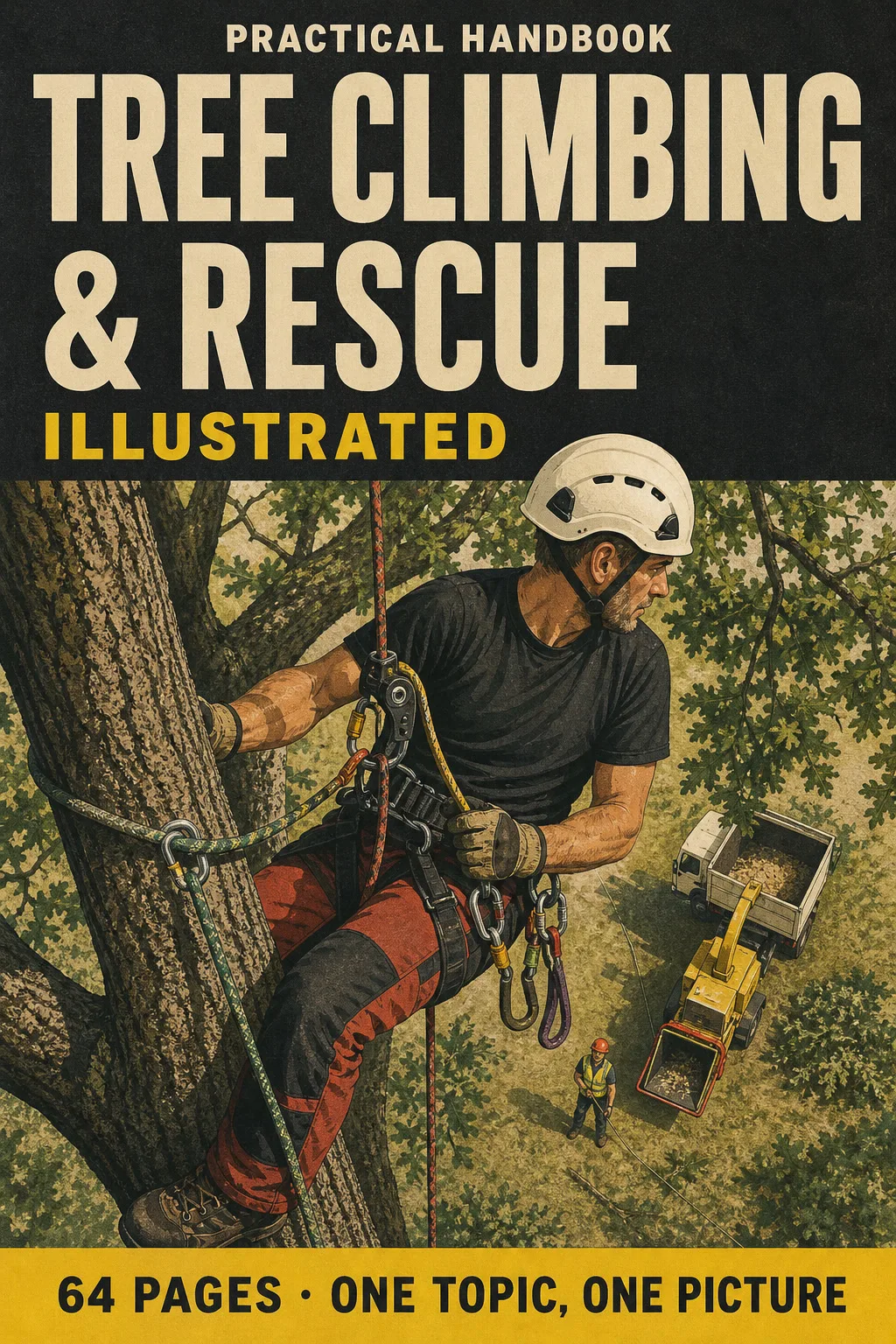
Tree Climbing, Aerial Rescue and Aerial Cutting (formerly CS38 & CS39), Illustrated Every Check, Knot and Rescue Step in the Same Order

Harness and karabiners, LOLER inspections, the key knots, overhead power lines, SRS and MRS, the aerial rescue, the kickback zone and the step cut. Each topic has its own page: the drawing first, then what you need to remember. 64 illustrated pages.

I WANT TO STUDY IT ILLUSTRATED

🔒 Secure checkout · PDF by email · 30-day guarantee

Every topic, its own pageEach knot, check and cut drawn, with the explanation alongside
64 illustrated pages8 parts, from the rules behind every climb to the night before your assessment
Up-to-date sourcesHSE guidance, LOLER 1998 and the Tree Work at Height Code of Practice
PDF by emailFormat

Look Inside the Book

Every page has one big drawing and a box with the distances, checks and steps you need to know:

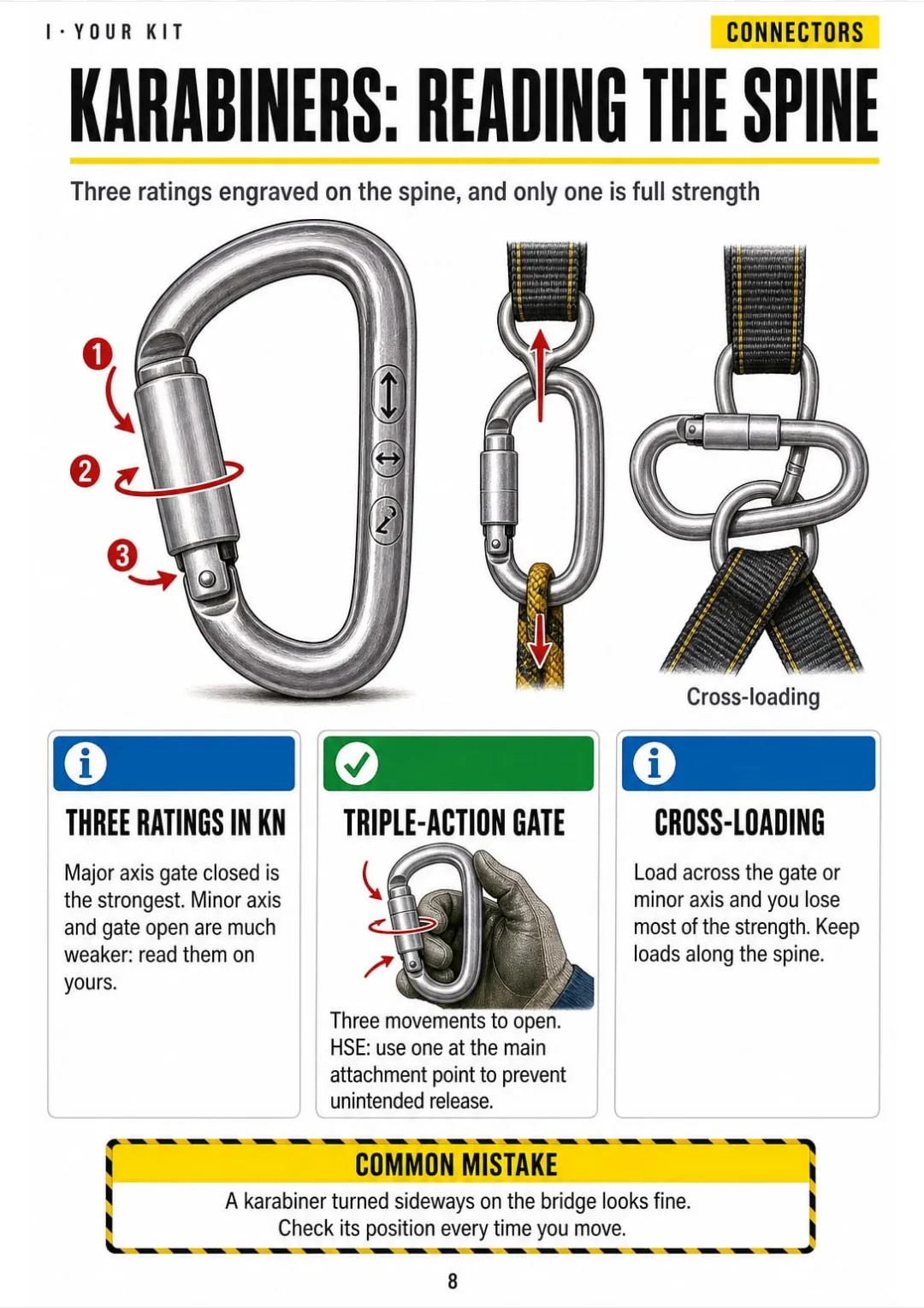
Major axis, minor axis, gate open: the three ratings on the spine.
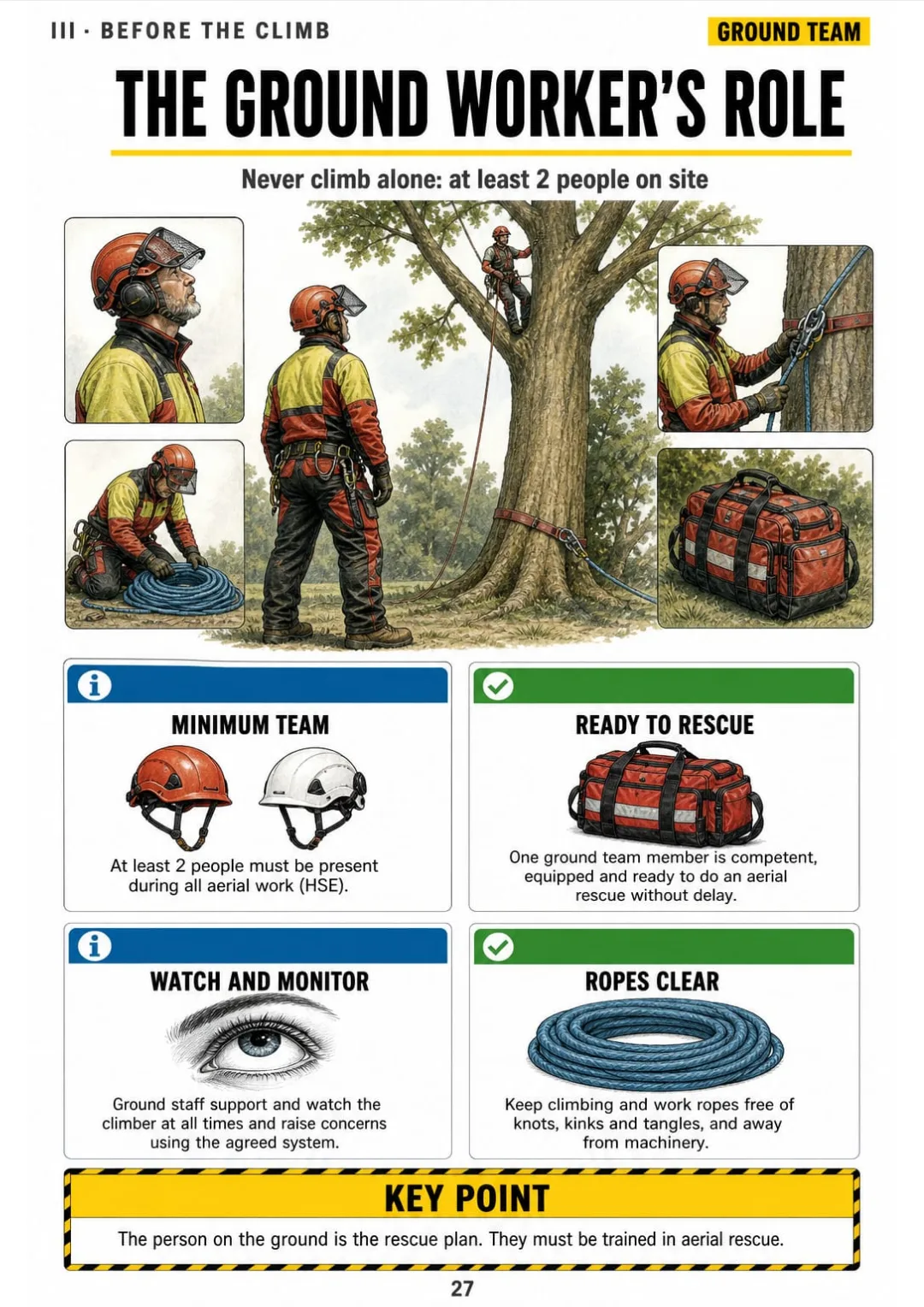
Minimum 2 people, one ready to rescue without delay: the ground worker's four jobs.
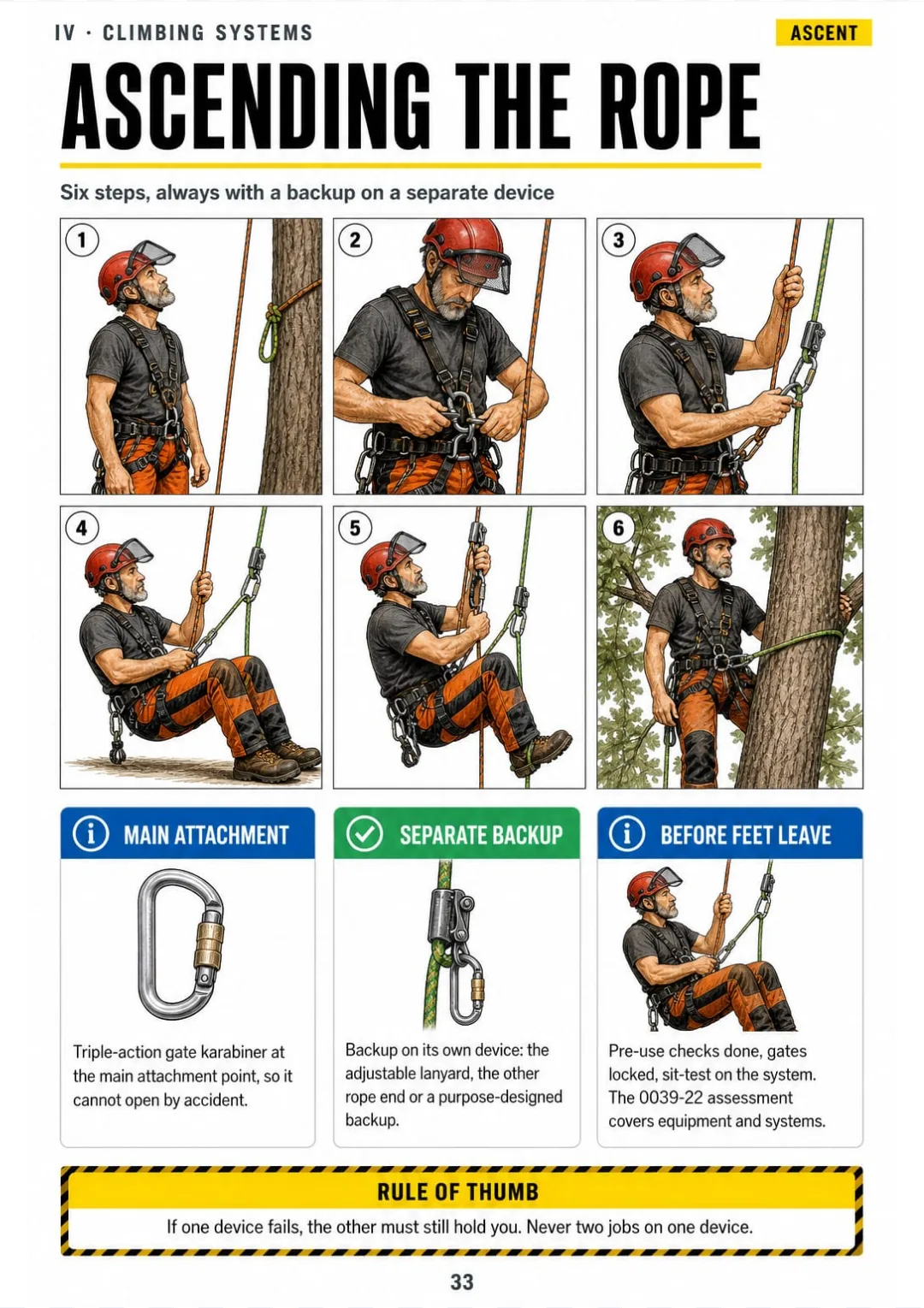
Ascent in six steps: checked, clipped, backed up, sit-tested, climbing, tied in at the top.
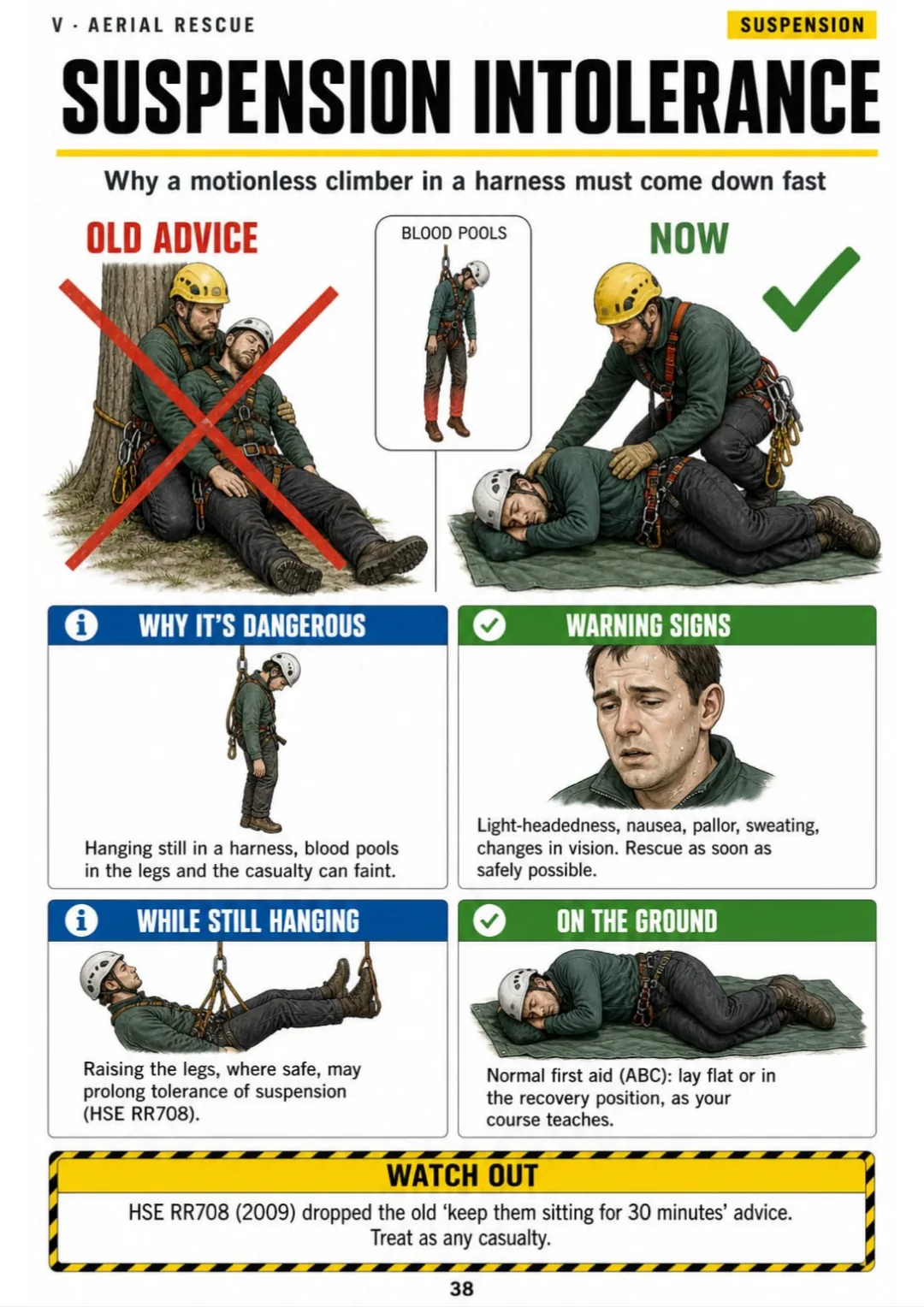
HSE RR708: down as soon as safely possible, then normal first aid (ABC)
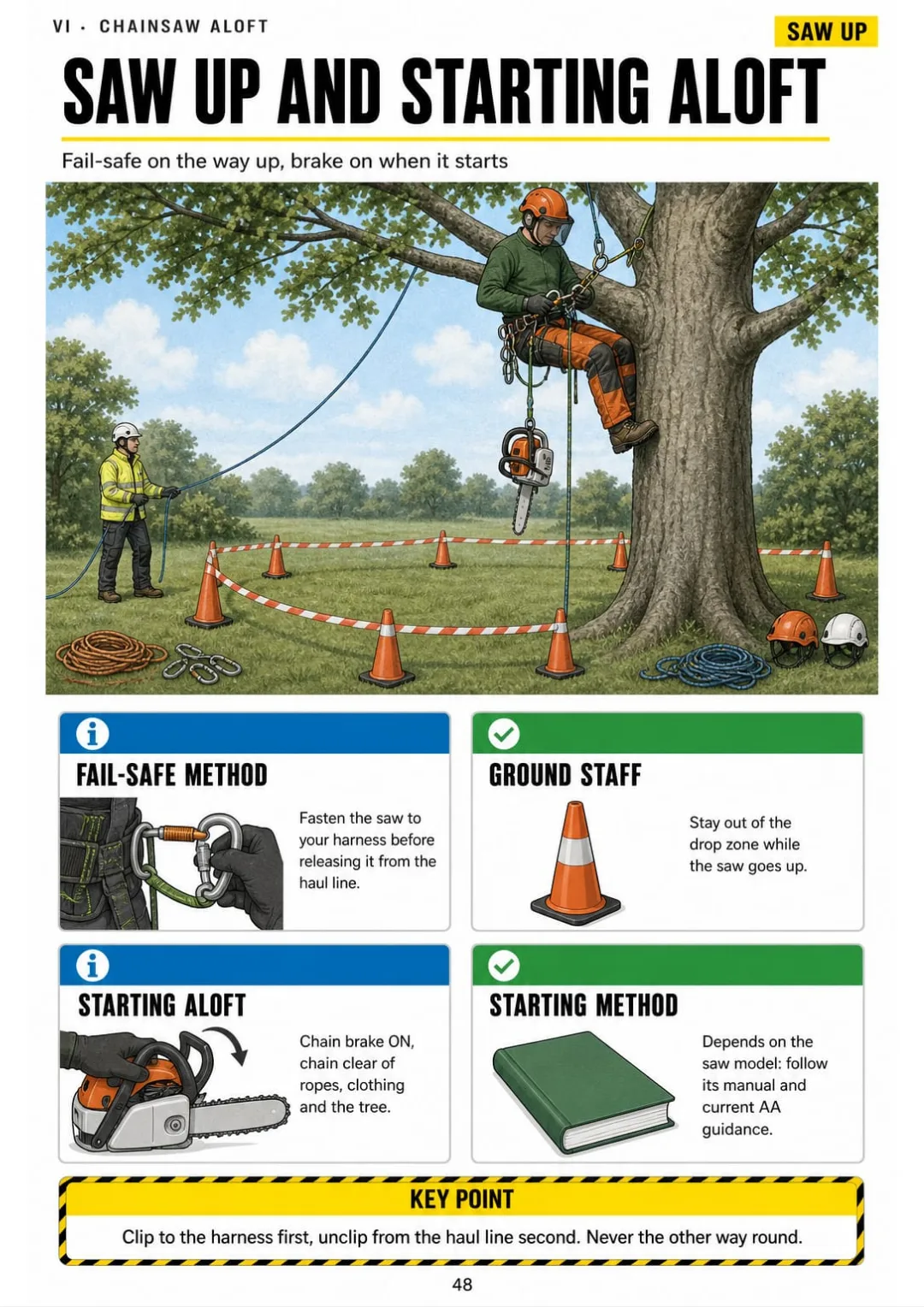
Saw on the harness before off the haul line; brake ON before it starts.
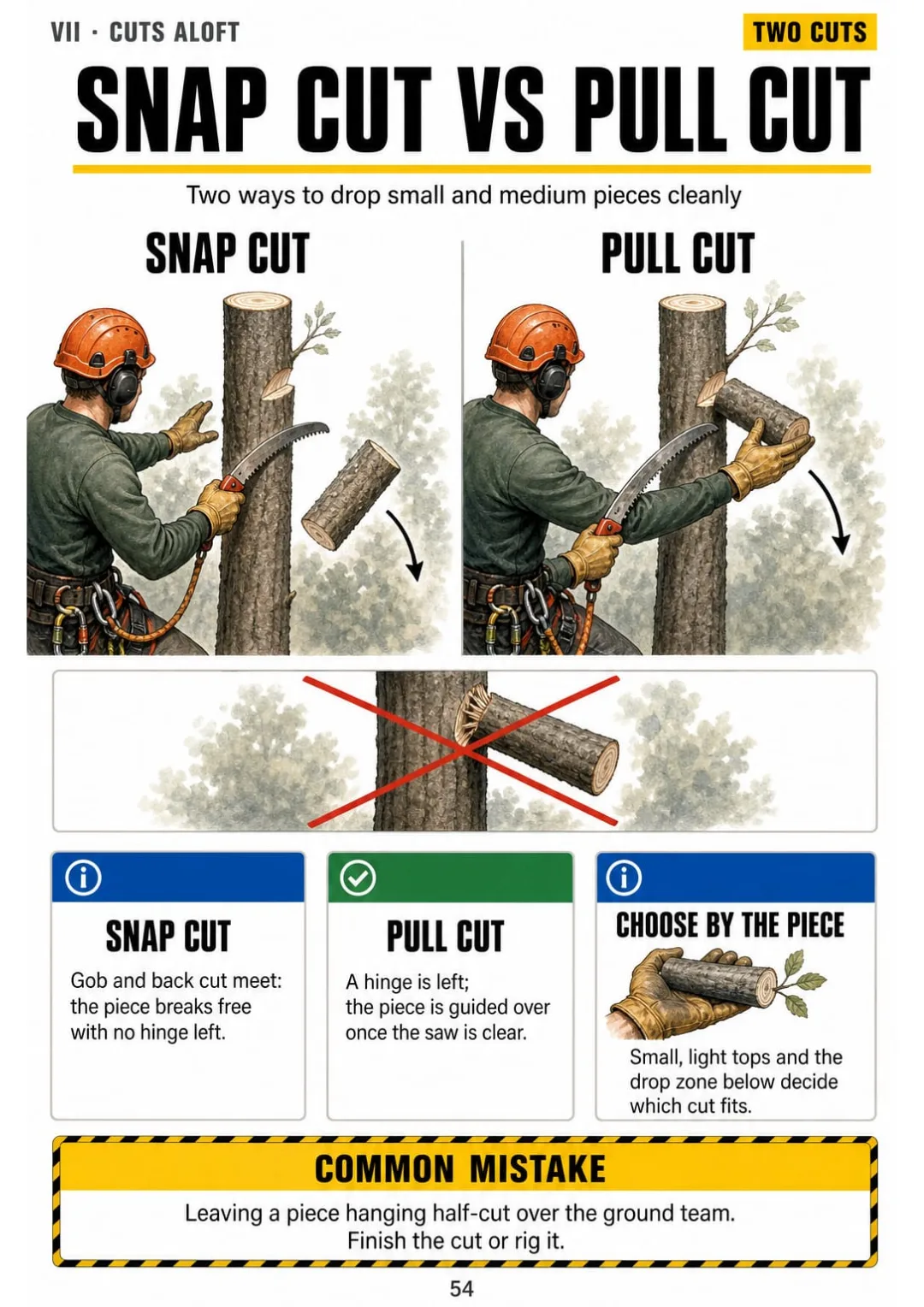
Snap cut and pull cut side by side, and the half-cut hanger to avoid.
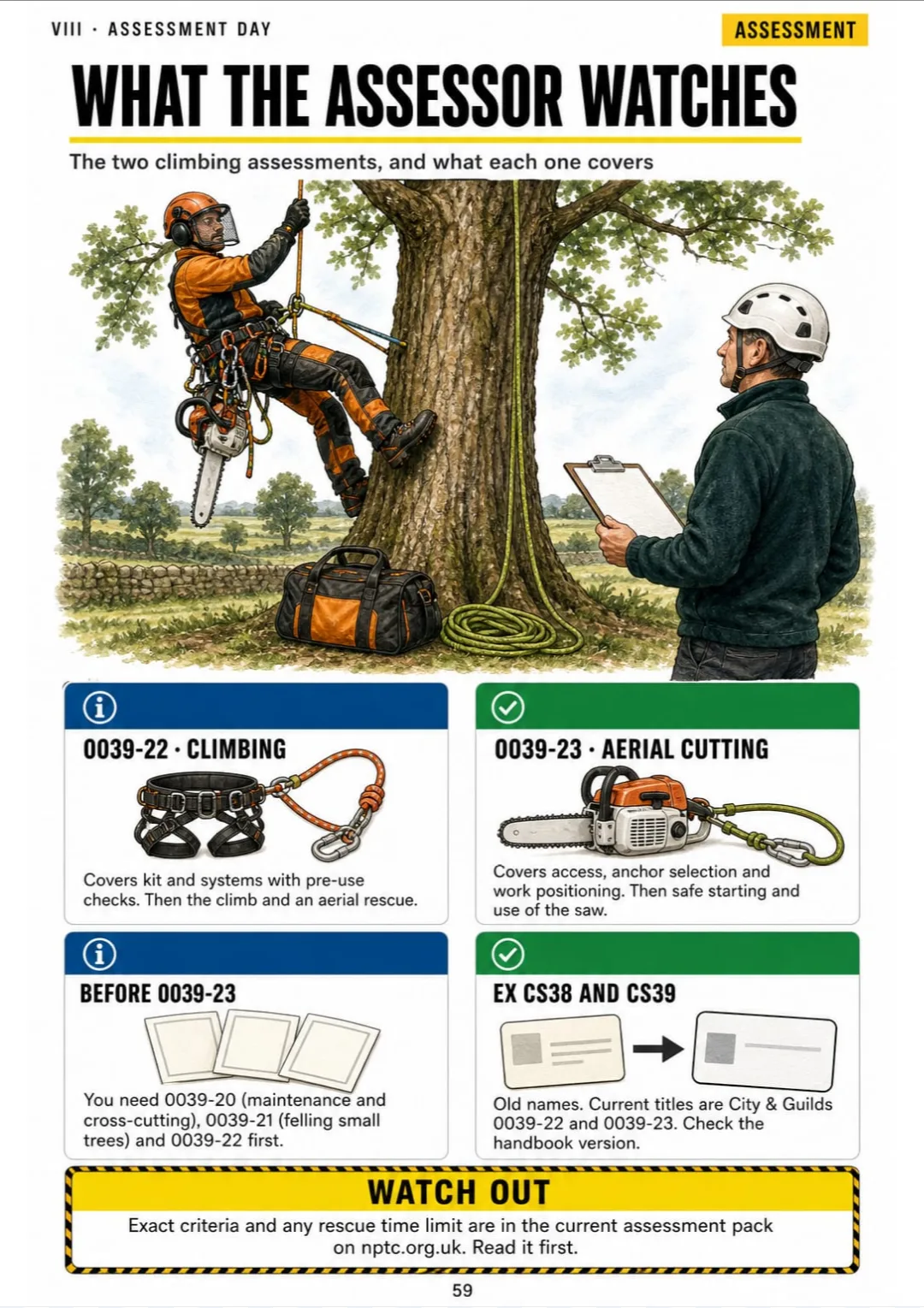
0039-22 (unit 203) and 0039-23 (unit 204): what each assessment covers
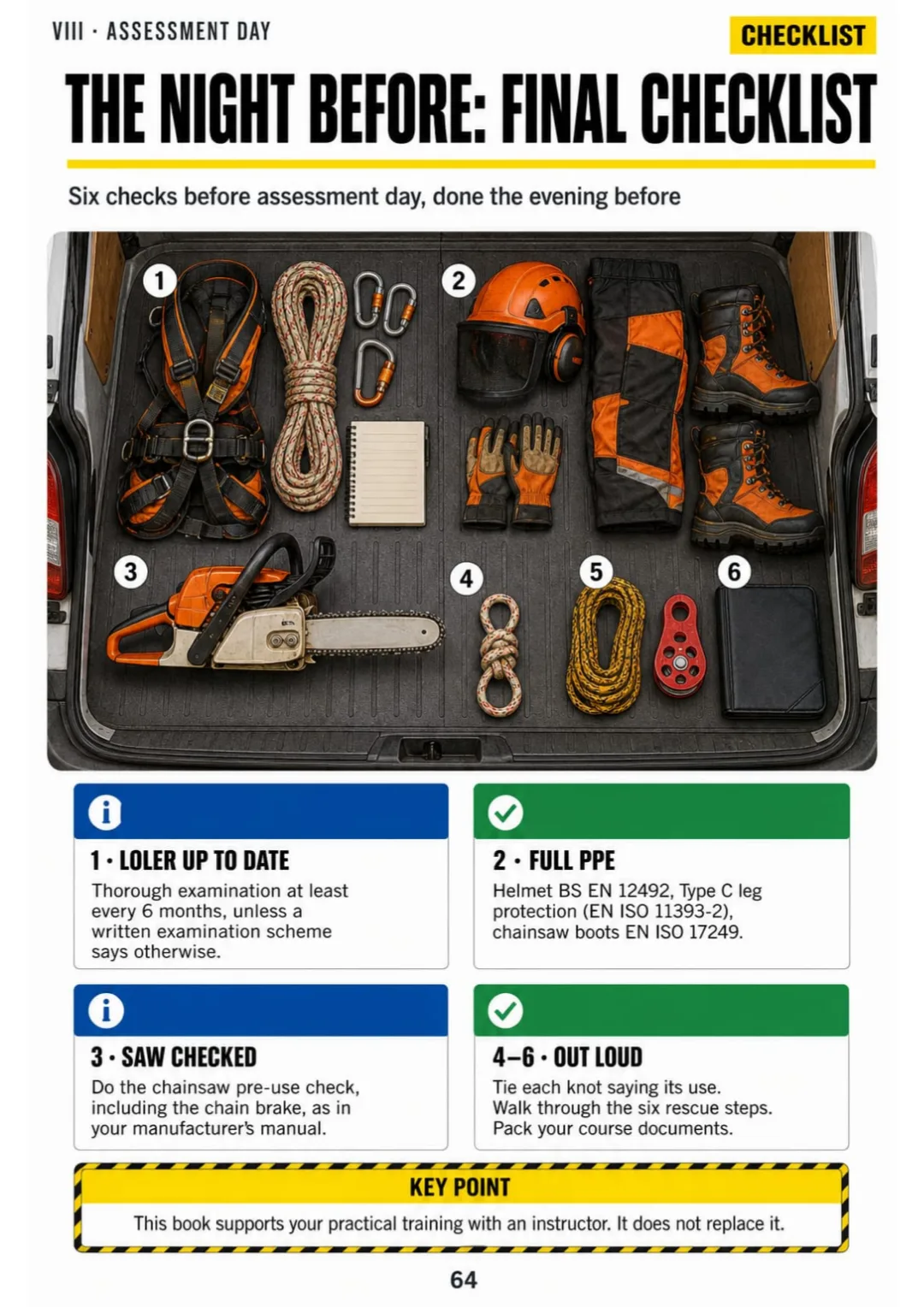
LOLER record, PPE, saw, knots, rescue, documents: 6 checks before the day

Swipe to see more →

These are real pages from the book. The table of contents is the full one: 8 parts and 60 topics.

The Problem Isn't You. It's How It Was Explained to You.

You're at the base of the tree with the rope set, and the assessor asks you to talk through your SRS before you leave the ground: which line is fixed, what's on your harness, where the safety line goes.

You've read it. But the manual explains SRS in long paragraphs with MRS mixed in, and under pressure the paragraphs run together.

Ascent in six steps: checked, clipped, backed up, sit-tested, climbing, tied in at the top.

In the book, SRS is one page: the fixed working line, the self-locking device on your harness and the safety line that travels with you, drawn side by side and labelled.

The rest works the same way: overhead power lines, suspension intolerance, the kickback zone, the step cut and the rescue in six steps. Each one has its own page.

You see the system, you understand it, and you set it up in front of the assessor without going back to the manual.

COMPARE FOR YOURSELF

The Same Topic, Two Ways to Study It

THIS
  • The manual: line after line
  • Power line distances explained only in words
  • You turn up to the assessment still unsure
Where tree work is to be undertaken in proximity to overhead electrical conductors, the duty holder shall ensure that a suitable and sufficient assessment of risk has been carried out prior to commencement. Guidance indicates that work within a distance of ten metres, measured horizontally at ground level from the nearest conductor, requires prior consultation with the network operator, and that a greater separation may be necessary where the height of the tree or the voltage of the line so dictates, having regard to HSE guidance note GS6 and the associated industry codes.
FOR THIS
  • Overhead power lines in one drawing
  • The distances and the number to call in a box
  • You see it and you get it
Minimum 2 people, one ready to rescue without delay: the ground worker's four jobs.
CONTENTS

Take a Look at the 8 Parts and 60 Topics

Kit and pre-use checks, knots, before you leave the ground, climbing systems, aerial rescue, chainsaw work aloft, cuts aloft and basic rigging, and assessment day: 64 pages, all illustrated

IYour Kit and Pre-Use Checks · pp. 5-12
  1. The Rules Behind Every Climb
  2. The Climbing Harness, Part by Part
  3. Climbing Rope: What to Look For
  4. Karabiners: Reading the Spine
  5. Friction Hitches, Pulleys and Devices
  6. PPE From Helmet to Boots
  7. Three Levels of Inspection Under LOLER
  8. Your Pre-Use Check, Always in the Same Order
IIThe Knots You Will Be Asked For · pp. 13-21
  1. Dressing, Setting and the Tail
  2. Running Bowline
  3. Figure of Eight on a Bight
  4. Distel Hitch
  5. Prusik and Klemheist
  6. Blake's Hitch
  7. Double Fisherman's and the Stopper
  8. Alpine Butterfly and Clove Hitch
  9. Italian Hitch for Lowering
IIIBefore You Leave the Ground · pp. 22-28
  1. Reading the Tree From the Ground
  2. Overhead Power Lines
  3. Weather and When to Stop
  4. The Site Risk Assessment
  5. Drop Zone and Exclusion Zone
  6. The Ground Worker's Role
  7. The Emergency Plan in Five Lines
IVClimbing Systems and Moving Aloft · pp. 29-36
  1. Throwline and Choosing the Anchor
  2. MRS: The Moving Rope System
  3. SRS: The Stationary Rope System
  4. Base Anchor vs Canopy Anchor
  5. Ascending the Rope
  6. Two Points of Attachment
  7. Repositioning and Redirects
  8. Controlled Descent
VAerial Rescue · pp. 37-44
  1. Why the Rescue Is Planned Before the Climb
  2. Suspension Intolerance
  3. Step 1: Assess From the Ground
  4. Step 2: Call for Help
  5. Step 3: Choose Your Way Up
  6. Step 4: Reach and Secure the Casualty
  7. Step 5: Transfer the Weight and Descend
  8. Step 6: On the Ground and First Aid
VIChainsaw Work Aloft · pp. 45-51
  1. Who Can Use a Saw in the Tree
  2. The Top-Handled Chainsaw
  3. Chainsaw Pre-Use Checks
  4. Getting the Saw Up and Starting It Aloft
  5. The Kickback Zone
  6. Your Position Before Every Cut
  7. Protecting Your Lines From the Saw
VIICuts Aloft and Basic Rigging · pp. 52-58
  1. The Hinge, Seen From Above
  2. Step Cut
  3. Snap Cut and Pull Cut
  4. Removing a Limb Safely
  5. Sectional Dismantling of the Stem
  6. Basic Rigging: Lowering a Section
  7. Talking to the Ground
VIIIAssessment Day and Review · pp. 59-64
  1. What the Assessor Watches
  2. The Whole Climb in One Page
  3. The Rescue in One Page
  4. Knot Review at a Glance
  5. Common Mistakes, Drawn Wrong and Right
  6. The Night Before: Final Checklist

One Page, One Topic, All Clear

Think of it this way:

It's the night before your assessment. Tomorrow the assessor wants the rescue, step by step, in the right order.

That evening, you open the rescue page and see six numbered drawings: assess, call 999, choose access, secure, descend, first aid. So on the day, the order is already in your head.

Saw on the harness before off the haul line; brake ON before it starts.

The same goes for the karabiner spine, the SRS set-up, overhead power lines, the kickback zone and the step cut: each on its own page.

Tree Climbing & Rescue Illustrated is 8 parts and 60 topics, all drawn, with review pages and a night-before checklist at the end.

What you see drawn, you don't have to memorize.

What's Inside Tree Climbing & Rescue Illustrated:

Ipp. 5-12

Your Kit and Pre-Use Checks

The rules behind every climb, harness, rope, karabiners, friction hitches and devices, PPE, LOLER inspections and your pre-use check in order.

IIpp. 13-21

The Knots You Will Be Asked For

Dressing and setting, running bowline, figure of eight, Distel, Prusik and Klemheist, Blake's hitch, double fisherman's, alpine butterfly, clove hitch and Italian hitch.

IIIpp. 22-28

Before You Leave the Ground

Reading the tree, overhead power lines, weather, the site risk assessment, drop and exclusion zones, the ground worker's role and the emergency plan.

IVpp. 29-36

Climbing Systems and Moving Aloft

Throwline and choosing the anchor, MRS and SRS, base and canopy anchors, ascending, two points of attachment, redirects and controlled descent.

Vpp. 37-44

Aerial Rescue

Why the rescue is planned before the climb, suspension intolerance and the six rescue steps, from assessing on the ground to first aid.

VIpp. 45-51

Chainsaw Work Aloft

Who can use a saw in the tree, the top-handled chainsaw, pre-use checks, starting it aloft, the kickback zone, your position and protecting your lines.

VIIpp. 52-58

Cuts Aloft and Basic Rigging

The hinge seen from above, step cut, snap and pull cuts, removing a limb, sectional dismantling, basic lowering and talking to the ground.

VIIIpp. 59-64

Assessment Day and Review

What the assessor watches, the whole climb and the rescue on one page each, knot review, common mistakes and the night-before checklist.

At the end of the book: Review pages, the whole climb and the rescue on one page each, and a night-before checklist.
Plus: 2 Free Books

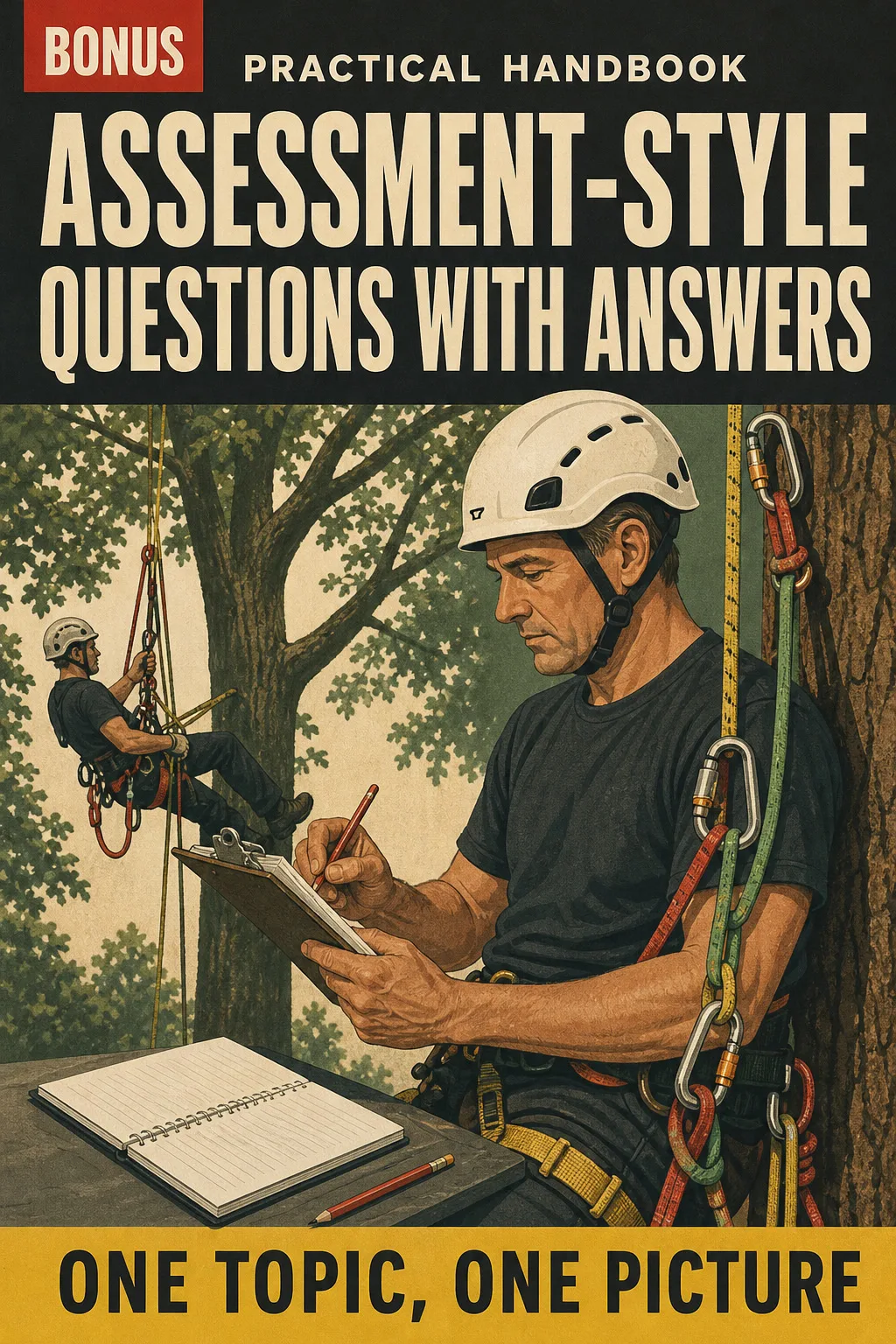
Assessment-Style Questions with Answers

BONUS 1: «Assessment-Style Questions with Answers»

Value on its own: US$ 17.90

Test yourself on kit, knots, rescue and cuts aloft before the assessor does, with the answer and the page to go back to.

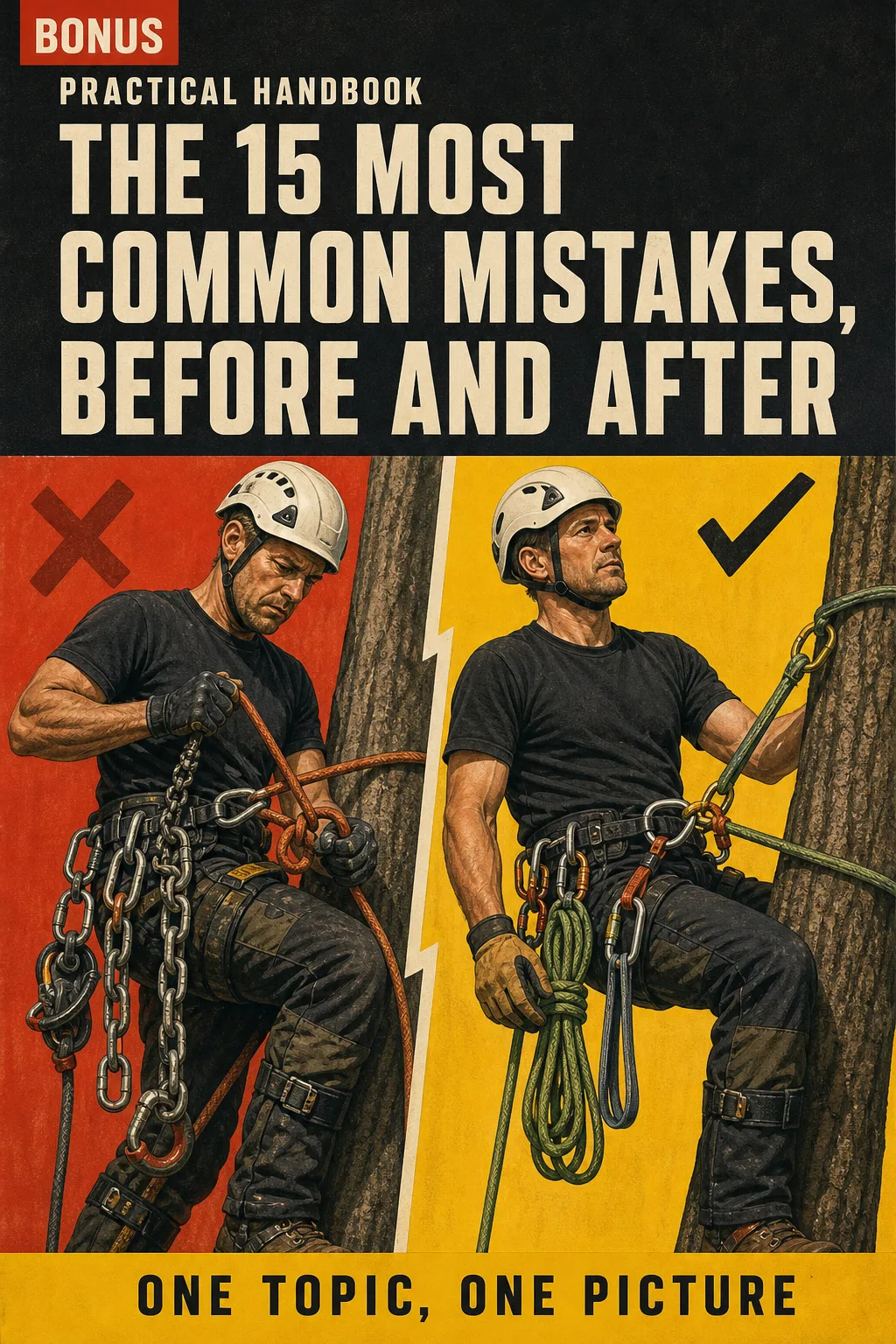
The 15 Most Common Mistakes, Before and After

BONUS 2: «The 15 Most Common Mistakes, Before and After»

Value on its own: US$ 14.90

See the slips that trip up climbers most often, from a badly dressed knot to a hinge cut too thin, drawn wrong and then right.

Tree Climbing & Rescue Illustrated with 2 Free Books

  • Tree Climbing & Rescue Illustrated: 64 illustrated pagesUS$ 63
  • BONUS 1: Assessment-Style Questions with AnswersUS$ 17.90
  • BONUS 2: The 15 Most Common Mistakes, Before and AfterUS$ 14.90
  • High-resolution PDF to printIncluded
Total value US$ 95.80
YOUR PRICE:
US$ 27
You save US$ 68.80
YES, I WANT TREE CLIMBING & RESCUE ILLUSTRATED FOR US$ 27

📄 This is a digital PDF book sent to your email: nothing is printed or shipped.

Secure purchaseEncrypted payment30-day guarantee

PDF by email: We email you Tree Climbing & Rescue Illustrated as a PDF, together with the two free books. It's a single payment: no installments, no extra charges.

Who This Book Is For

You're new to arboriculture

You're new to arboriculture

Came over from landscaping, building or forestry? With one topic per page you get the kit, knots and systems in an order you can follow in the evening after work.

Your assessment date is booked

Your assessment date is booked

The rescue in six steps, the knot review and the night-before checklist, so you go over everything in the same order every time.

You already work on a tree crew

You already work on a tree crew

Groundie stepping up, or climber going for aerial cutting? The cuts aloft, kickback zone and rigging pages are there to check before the job.

Everything You Get Today

US$ 95.80US$ 27
YES, I WANT TREE CLIMBING & RESCUE ILLUSTRATED FOR US$ 27

📄 This is a digital PDF book sent to your email: nothing is printed or shipped.

30DAYS
GUARANTEE

30-Day Guarantee

Try Tree Climbing & Rescue Illustrated for 30 days, bonus books included.

We refund everything if the file won't open, if the book isn't what you see here, if you were charged twice or if the email doesn't arrive. Just email us.

You pay once. No subscriptions.

Frequently Asked Questions

Is it for me if I already work as a groundie?

Yes. It starts with the kit and the rules, so a newcomer can follow it, and goes on to SRS, the rescue and cuts aloft, so it's also useful if you've been on the ground for years and are stepping up to climb.

Where does the content come from?

It's written for the UK, not the US. It follows the NPTC / City & Guilds tree climbing and aerial rescue and aerial cutting assessments (formerly CS38 and CS39), and it's checked against current UK guidance: the Work at Height Regulations 2005, LOLER 1998 and PUWER 1998 (HSE), the industry Code of Practice for tree work at height, BS 3998:2010 and HSE GS6 on overhead power lines.

Is it official material?

No. It's independent study material, not published or endorsed by NPTC, City & Guilds, the HSE or any training provider. It doesn't give you a certificate or qualification: that only comes from passing your assessment with an approved assessor.

Does it replace the course?

No. Climbing, rescue and chainsaw work aloft are learnt hands-on with a qualified instructor. The book helps you review between sessions and before your assessment; it doesn't replace the course, the assessment or supervision.

Are the practice questions the ones in the assessment?

No. They're written for this book, on the topics it covers, so you can test yourself. They aren't official assessment questions.

When and how does it arrive?

The book and the 2 free books arrive as PDFs by email, at the address you enter at checkout.

Do I have to pay every month?

No. It's a one-off payment, with no subscription.

Can I have it on paper?

Yes. The PDF is ready to print, at home or at a print shop, so you can keep it in the van.

How does the refund work?

You have 30 days. We refund everything if the file won't open, if the book isn't what you see on this page, if you were charged twice or if the email doesn't arrive: just email us.

Before You Close This Page

No more rereading with nothing sticking.

SRS, the rescue, the step cut: you see them drawn and that's it.

You turn up to your assessment knowing where everything is.

Drawings make studying faster.

The book is right below.

One-time payment: US$ 27 · Guarantee: 30 days · PDF by email

YES, I WANT TREE CLIMBING & RESCUE ILLUSTRATED FOR US$ 27

📄 This is a digital PDF book sent to your email: nothing is printed or shipped.